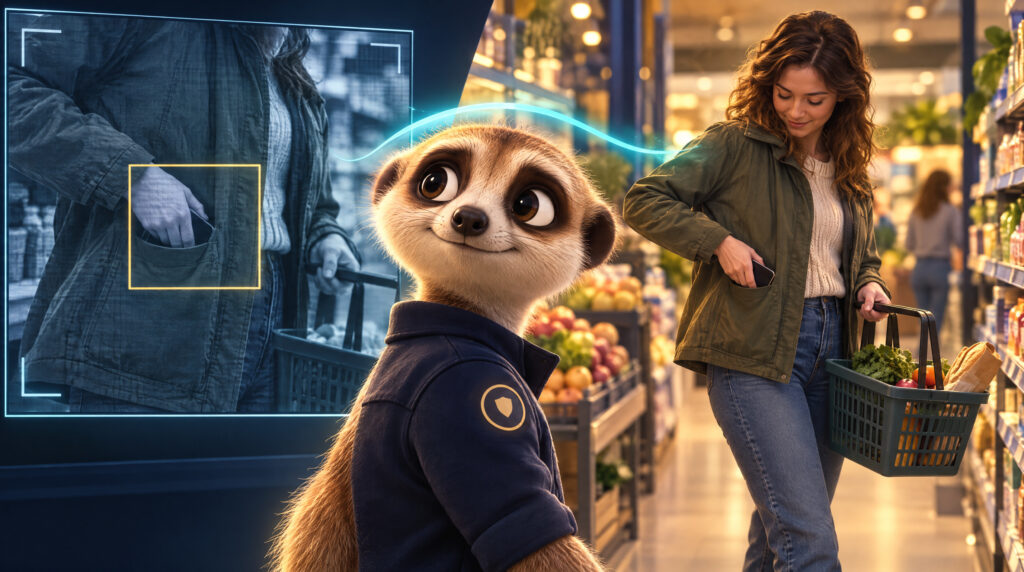
A recent report from ABC7 Chicago looked at AI software that watches shop cameras and flags suspected shoplifting. According to the report, about two dozen stores in the Chicago area now use it.
The software is added to a store’s existing cameras. It analyzes what happens on the shop floor in real time and sends staff an alert, with a box drawn around the shopper on screen. Staff then decide whether to keep watching or step in.
A grocery store manager in Naperville told the station his store now catches about two suspected shoplifters a day. Before, when people reviewed the footage, only a few were stopped each week. He said alerts arrive within seconds and that signs about the system seem to put people off stealing.
The company behind the software told ABC7 it does not collect facial recognition data or biometrics, and does not target people by race or gender. Some shoppers still raised concerns: that ordinary customers end up being watched, and that people could be singled out unfairly.
Why this matters for small shops
For an independent shop, the appeal is obvious. You can’t afford a security guard, and nobody has time to watch a screen all day. A system that says “look here, now” sounds like exactly what you need.
But an alert is not a decision. Someone still has to look at the screen and judge what is going on. Is that person hiding a bottle, or putting their phone back in their pocket? Is this a nervous teenager or someone about to get aggressive? In a small shop, that someone is usually the owner, alone behind the counter.
My take
AI is very good at video recognition. It can spot a hand moving to a pocket, a person lingering in an aisle, an item leaving a shelf. That is useful, and it is getting better fast.
What it does badly is read people. It does not understand intent. It does not feel the moment a situation is about to turn. Humans have an instinct for that. We read posture, tone and timing in a way software can’t. A vendor quoted in the report said AI “doesn’t get tired.” True. But it also doesn’t understand.
That is why I believe a human layer is essential, and mainly for ethical reasons. When a system can lead to someone being confronted in front of other customers, a real person should be in the loop who can weigh the context. Fairness and privacy concerns, like the ones shoppers raised here, are much easier to handle when a human makes the call.
There is also the question of where the money goes. Many AI camera products run on costly proprietary technology, and a large share of what shops pay ends up with big tech. I use big tech tools myself, so this is not a crusade. My point is that shop owners should have a choice. At Sentinel Watch, the money goes to the people who do the watching and who really need the income.
Use AI to spot things. Let people decide what they mean.
Source: ABC7 Chicago