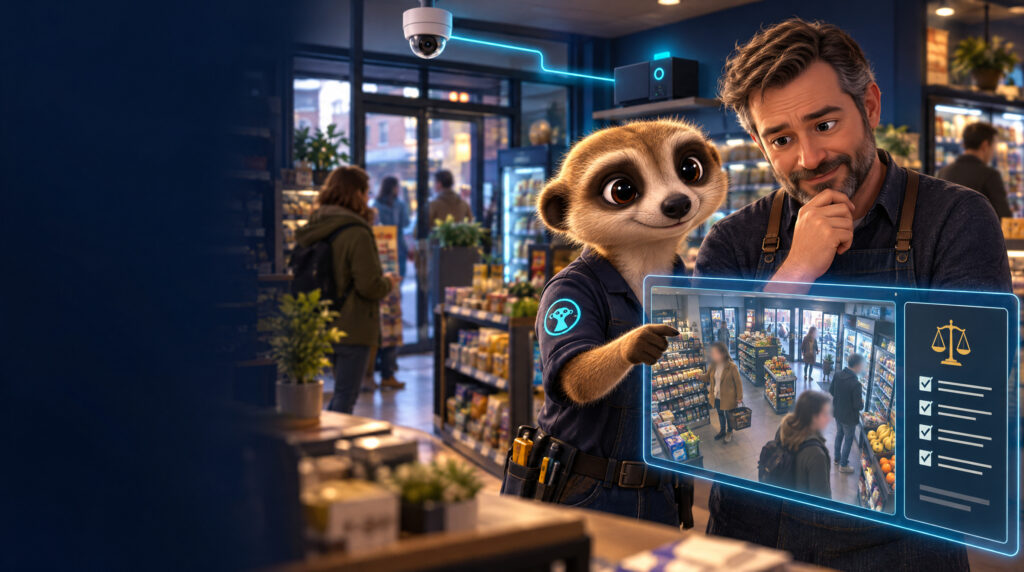
This week the UK Home Office committed to introducing codes of practice for facial recognition technology, covering both the public and the private sector. That second part matters for shops. Scottish Local Retailer reports that the Association of Convenience Stores (ACS) welcomed the news as an important step for retailers.
The details of the codes have not been published yet. What we know so far is the commitment itself.
The article also shares figures from the ACS 2026 Crime Report. Convenience retailers spent more than £300 million in a year on crime prevention and detection, with CCTV as their top investment priority. More than one in five convenience retailers (22%) already use facial recognition, and another 35% plan to invest in it.
ACS chief executive Ed Woodall said the technology has become an important tool against crime, helping shops spot prolific offenders faster and warn other local businesses. He said ACS has “long called for clarity” and wants retailers to stay on the right side of GDPR and other privacy laws. Facewatch, which supplies facial recognition to retailers, also welcomed the move and called clear rules, independent oversight and accountability vital to public trust.
Why this matters for small shops
If you run a small shop, you are not a lawyer. You want to protect your stock and your staff without wondering whether your camera setup could land you in trouble.
Until now, that has been hard to judge. Clear rules make it easier to choose. They tell you what is allowed, what you have to tell customers, and what a responsible provider should be doing for you.
The numbers also show how much small retailers already spend on security. That is a lot of money from businesses that usually run on thin margins. It is worth knowing exactly what you are paying for.
My take
I welcome this. Rules for how shops use cameras and identification tech are good for everyone: shop owners, customers and the people who build these systems.
Whatever technology a shop uses, I believe a human layer is essential. Software is very good at recognizing things on video. It is much weaker at reading people and situations. Before anyone is approached or turned away, a person should look at the context and make the call. That is mainly an ethical point, not a technical one.
I also think shop owners should have a real choice in how they protect their store. There are different ways to do this. Some systems are built to identify people. Others, like ours at Sentinel Watch, blur faces inside the shop before any video leaves it. Different shops will weigh privacy, cost and protection differently, and that is fine. What matters is that the choice is clear and informed.
A rulebook won’t solve shop crime. But it helps shop owners make better decisions, and that is a good start.
Source: Scottish Local Retailer